
How to Achieve Financial Independence with Boring Businesses
A Grounded, Practical Guide to Building Lasting Wealth Through Reliable, Everyday Ventures
Table of Contents
- Introduction
- Understanding Financial Independence
- Why Boring Businesses Are Ideal for Financial Independence
- Real-World Examples of Boring Businesses
- Step-by-Step Guide to Starting or Acquiring a Boring Business
- Financial Strategies for Long-Term Success
- Managing Risks and Common Challenges
- Case Studies and Success Stories
- Scaling Your Boring Business Portfolio
- Conclusion: Your Path Forward
Introduction
In today’s world, flooded with tales of tech unicorns, viral apps, and overnight millionaires, it’s easy to believe that financial independence requires chasing the next big innovation or taking massive risks in volatile markets. But the reality for most people who achieve lasting wealth is far more straightforward—and far less glamorous. Financial independence often comes from owning and operating what are commonly called “boring businesses”: reliable, essential service-based operations like laundromats, self-storage facilities, car washes, vending routes, or commercial cleaning services.
These businesses don’t make headlines. They don’t attract venture capital. They rarely go viral on social media. Yet, they generate consistent cash flow, withstand economic downturns better than most, and provide a proven path to financial freedom. This guide is dedicated to exploring exactly how to achieve financial independence with boring businesses. We’ll break down the concept in detail, drawing from real-world data, expert insights, and practical strategies that prioritize stability over speculation.
Financial independence (often shortened to FI) is the point where your assets generate enough passive or semi-passive income to cover your living expenses indefinitely, without needing to work for money. It’s not about retiring to a beach at 30—though that’s possible for some—but about gaining control over your time and choices. Boring businesses excel here because they produce predictable profits from recurring customer needs. People will always need clean clothes, secure storage, or a washed car, regardless of stock market swings or tech trends.
Contrast this with high-risk ventures. Tech startups have a failure rate exceeding 90%, according to various studies. Even successful ones often require years of burning cash before profitability. Boring businesses, however, can start cash-flow positive from acquisition or early operations. Industry data shows laundromats averaging 20-35% annual ROI, self-storage facilities maintaining 90%+ occupancy rates, and many service businesses scaling with low overhead.
Thought leaders like Codie Sanchez of Contrarian Thinking and Nick Huber of The Sweaty Startup have popularized this approach. Sanchez advocates buying established “Main Street” businesses, emphasizing that “boring does not mean broke.” Huber, who built wealth through storage and service companies, stresses executing on “sweaty” opportunities that others overlook. Their portfolios demonstrate how these ventures fund freedom without the flash.
This article draws from current 2025 industry statistics: the self-storage market exceeds 2.6 billion square feet with steady growth, laundromats show strong 20-35% cash-on-cash returns, and service sectors like cleaning remain resilient. We’ll cover definitions, examples, acquisition steps, financial management, risks, case studies, and scaling—all in depth, with no shortcuts or hype.
Whether you’re a salaried professional seeking an exit ramp, a side-hustler building assets, or someone reevaluating wealth-building strategies, this guide offers grounded advice. Links to resources on our FI resources page provide tools for calculations and planning. For broader context, see Investopedia on financial independence or Contrarian Thinking’s insights.
The path isn’t quick or easy—it requires diligence, patience, and operational focus—but it’s reliable. Many have built multi-million-dollar net worths this way, quietly compounding wealth while living on their terms. Let’s explore how you can too.

By the end, you’ll have a comprehensive roadmap. We’ll start with clarifying financial independence, then dive into why boring businesses align so well, examine specific examples with data, outline actionable steps, discuss finances and risks, review real cases, and consider scaling for accelerated FI.
Remember: wealth from boring businesses comes from consistency, not excitement. It’s about serving real needs efficiently, reinvesting profits wisely, and letting time do the heavy lifting. This approach has created countless “stealth millionaires”—individuals who achieve FI without fanfare, funding lives of choice through steady operations.
In 2025, with economic uncertainty lingering, these recession-resistant models are more relevant than ever. Demand for essentials persists, competition in niche locales remains low, and acquisition opportunities abound as baby boomers retire. Platforms like BizBuySell list thousands of profitable operations for sale at reasonable multiples.
This isn’t theory; it’s a proven model. Data from sources like the Self Storage Association and Coin Laundry Association confirm high survival rates (95% for laundromats over five years) and attractive returns compared to stocks or real estate alone.
If you’re ready for a practical, no-nonsense path, read on. Financial independence through boring businesses is achievable—with the right mindset and execution.
Understanding Financial Independence
Financial independence represents a fundamental shift in how you relate to money and work. At its core, FI means your investments or income-generating assets produce enough revenue to sustain your desired lifestyle without requiring active employment. This freedom allows choices: continue working for fulfillment, travel extensively, volunteer, or simply reduce stress from financial pressures.
The modern FI movement, popularized by blogs like Mr. Money Mustache and books like Your Money or Your Life, gained traction in the 2010s. It emphasizes frugality, high savings rates, and intelligent investing. A common benchmark is the 4% rule, derived from the Trinity Study: withdraw 4% of your portfolio annually, adjusted for inflation, with a high probability of lasting 30+ years. Thus, if annual expenses are $50,000, target a $1.25 million portfolio ($50,000 / 0.04).
Calculations vary. Some prefer 3.5% for conservatism, others factor Social Security or side income. Tools like FI calculators on sites such as our site help model scenarios. Key inputs: current age, expenses, savings rate, expected returns, inflation.
Boring businesses supercharge FI by providing higher, more controllable returns than traditional investments. Stock markets average 7-10% historically, but a well-managed laundromat or storage facility can deliver 20-35% cash-on-cash ROI. Profits can be reinvested, used to pay down debt, or fund lifestyle—accelerating the timeline dramatically.
Consider a hypothetical: earning $100,000 salary, saving 50% ($50,000/year). At 8% returns, FI ($1.25M portfolio) takes ~20 years. Add $100,000 annual business profit (reinvested), and it could drop to under 10 years. Real examples abound in FI communities like r/financialindependence.
FI isn’t solely about numbers—it’s psychological. Achieving it reduces anxiety, improves relationships, and enables purpose-driven living. Boring businesses fit because they become semi-passive: hire managers, systemize operations, oversee remotely. Many owners reach FI while businesses run with minimal involvement.
Challenges include lifestyle creep (increasing expenses as income rises) and market volatility. Boring businesses mitigate this with diversified, tangible income streams. Combine with index funds for balance.
In 2025, with higher living costs in many areas, FI requires adaptability. Boring businesses offer inflation hedge: raise prices modestly, demand remains. Unlike jobs vulnerable to layoffs, ownership provides control.
Start by auditing expenses—cut ruthlessly without sacrificing quality of life. Build emergency funds (6-12 months). Then, explore business opportunities. FI through boring ventures is incremental: start small, learn, scale.

Ultimately, FI is personal. Some target lean FI ($500K portfolio for modest living), others fat FI for luxury. Boring businesses allow customization: generate just enough for basics or scale for abundance.
Resources: Mr. Money Mustache for frugality tips, or our internal FI mindset guide.
Why Boring Businesses Are Ideal for Financial Independence
Boring businesses—those providing essential, non-disruptive services—offer unique advantages for FI seekers. They prioritize cash flow, resilience, and simplicity over growth hype.
First, predictability. Unlike tech reliant on trends, boring operations serve evergreen needs. Economic downturns? People downsize but still store belongings or wash clothes. Data shows self-storage occupancy above 90% even in recessions, laundromats maintaining steady volume.
Second, cash flow from day one. Many acquire established businesses generating immediate profits. Multiples often 2-4x annual earnings—affordable with financing. Contrast startups needing years to breakeven.
Third, low competition in niches. Glamour draws crowds to apps; locals overlook laundromats or pest control. This moat protects margins.
Fourth, operational leverage. Systems allow delegation. Owners shift from operator to overseer, freeing time—key for FI.
Fifth, scalability without complexity. Add locations, routes, or services incrementally. No need for massive R&D.
In 2025, opportunities grow. Boomer retirements flood market with listings. SBA loans facilitate buys with 10-20% down.
Experts agree. Codie Sanchez notes boring businesses fund freedom reliably. Nick Huber built empire on storage/services, proving execution trumps ideas.
Drawbacks? Physical assets require maintenance, less “sexy” appeal. But rewards outweigh: higher returns, control, resilience.
Comparison: Boring vs. Flashy Ventures
Boring: 20-35% ROI potential, 95%+ survival rates, recurring revenue.
Flashy: High failure (90%+), volatile, capital-intensive.
Link to our comparison post. External Resource: UpFlip’s 2025 boring business ideas.

Boring businesses align with FI principles: compound through reinvestment, minimize risk, maximize freedom.
Real-World Examples of Boring Businesses
Let’s examine proven boring businesses, with 2025 data on costs, revenue, ROI.
Laundromats
Customers pay for washes/dries; owners maintain equipment. Recession-resistant—clean clothes essential.
Startup/Acquisition: $200K-$1M. Average revenue: $150K-$300K/year. Margins: 30-40%. ROI: 20-35% cash-on-cash.
Advantages: Low labor (attended or unattended), 24/7 potential, add wash-fold for premium revenue.
2025 trends: Card payments, apps for machine availability boost efficiency.
Calculators & Guides: Laundromat ROI Calculator | Laundromat Business Guide

Vending Machines
Place in high-traffic spots, stock snacks/drinks. Highly passive.
Startup: $2K-$10K/machine. Route revenue: $300-$1,000/month/unit. Scale to hundreds.
ROI: 15-30%. Low overhead, cash-based.
2025: Cashless payments increase sales 20-30%.
Calculators & Guides: Vending Route ROI Calculator | 2026 Vending Route Guide

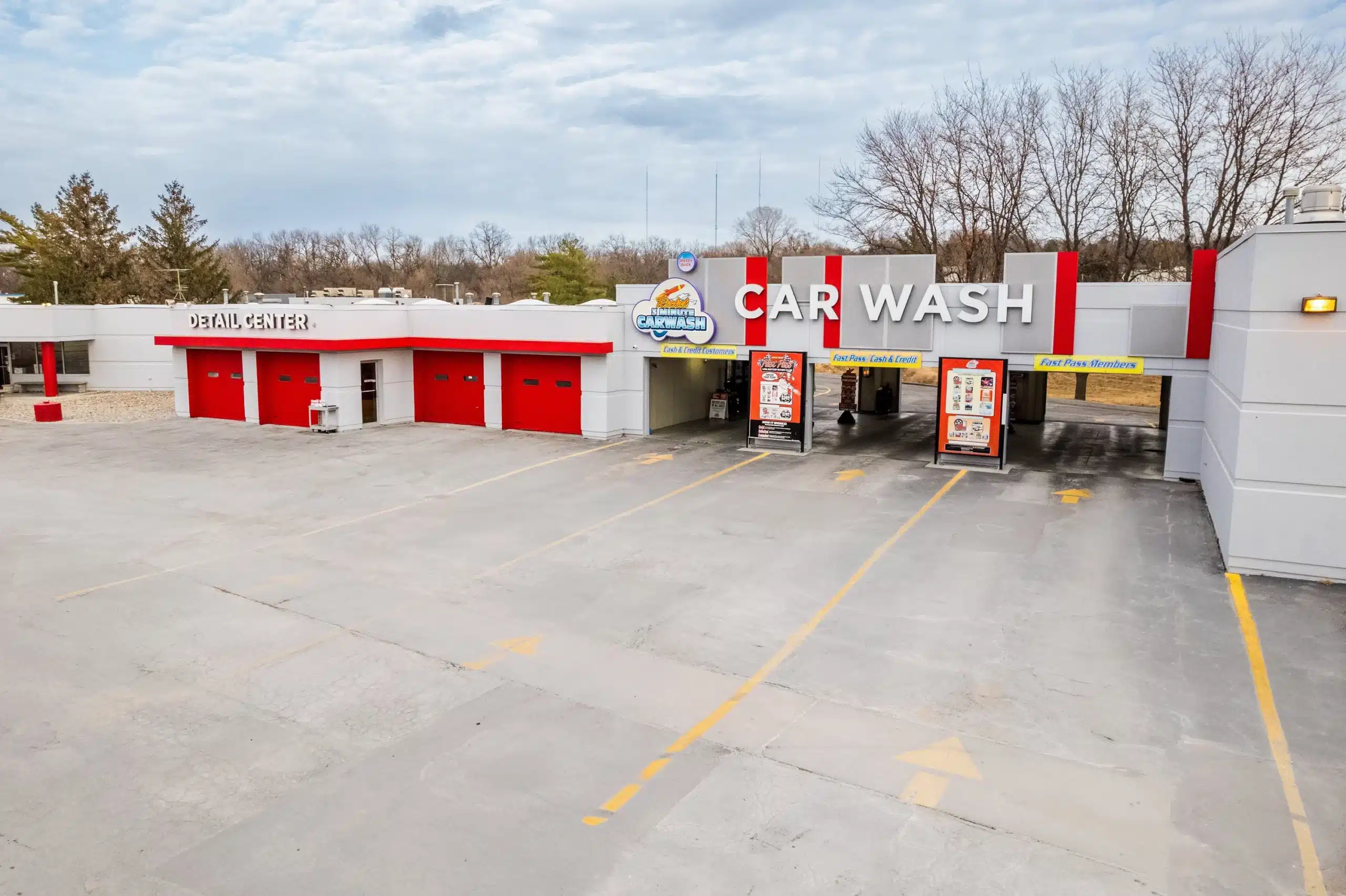
Car Washes
Automated/self-serve. Recurring (memberships).
Cost: $500K-$2M. Revenue: $200K-$1M+. Margins: 40-60%. ROI: Strong with location.
Calculators & Guides: Car Wash ROI Calculator | $1M a Year Car Wash Guide
Self-Storage Facilities
Rent units. Minimal maintenance.
Cost: $1M+. Market: 2.6B sq ft, growing. Occupancy: 90%+. Margins: 50%+. 2025: Demand from urbanization.
Guide: Self-Storage Business Guide

Others: Cleaning, pest control, waste. Explore our ideas page. External Resource: Physician on FIRE list.
Step-by-Step Guide to Starting or Acquiring a Boring Business
The most reliable method for achieving financial independence through boring businesses is acquisition—buying an existing, cash-flowing operation. This bypasses the most dangerous period for any startup: the first three years. The process requires discipline and methodical execution.
- Self-Assessment & Industry Targeting: Before reviewing listings, look inward. What are your core competencies? A maintenance background suits laundromats or car washes; organizational skills suit storage facilities. Assess your available capital (savings, home equity) and honest risk tolerance. **Target industries that match your strengths** and the size of your initial investment envelope. This prevents “shiny object syndrome.”
- Market Research: Local Demand & Competition: Financial independence is built on serving essential, local needs. Use tools like Google Trends and local census data to verify population density, income levels, and growth. Crucially, conduct **site visits** to competing businesses. Are they poorly managed? Are they running old equipment? Opportunities for optimization (The Value-Add) are the biggest signal for a profitable acquisition.
- Education & Community Immersion: The barrier to entry for these businesses is often knowledge, not capital. Read foundational books like Nick Huber’s *The Sweaty Startup* or resources from Contrarian Thinking. Join niche communities (e.g., Coin Laundry Association forums, self-storage groups on Reddit or BiggerPockets). This network will provide necessary due diligence knowledge and peer support.
- Search Listings & Filtration: Platforms like BizBuySell and local business brokers are your primary search engines. **Filter ruthlessly.** Focus on businesses with a clear history of profitability and motivated sellers (retirement, health, burnout). Be skeptical of businesses selling for unusually high multiples or those that rely heavily on the current owner’s personal contacts.
- Due Diligence: Financials and Leases: This is where speculation ends and data begins. Demand three years of comprehensive financial statements (Profit & Loss, Balance Sheets, Tax Returns). Hire an experienced accountant who specializes in small business acquisition—they will confirm the Seller’s Discretionary Earnings (SDE) and uncover red flags. Simultaneously, review all leases, vendor contracts, and equipment maintenance records. **The lease term is critical for stability.**
- Financing: Leveraging Loans and Seller Capital: Achieving financial independence often requires leveraging good debt. The **SBA 7(a) loan** is the gold standard, often requiring only a 10-20% down payment. Supplement this with seller financing, where the seller holds a portion of the debt. This shows the seller has confidence in the business’s future and reduces your required cash at closing.
- Negotiation: Focus on SDE and Transition: The valuation is primarily based on a multiple of the SDE (typically 2-4x). Negotiate based on documented risk and opportunity. Crucially, secure a **training and transition period** (4–12 weeks). This handover is vital for understanding operational quirks and retaining key employees and customers.
- Close and Operate: Systematization for FI: Post-closing, your first goal is to **systemize operations and implement management oversight**. This is the shift from “active worker” to “passive owner,” which is essential for FI. Introduce key performance indicators (KPIs), delegate non-critical tasks, and focus on value-adds (e.g., adding cashless payments to a laundromat).
Starting New: The Slower, Riskier Path: If acquiring is impossible, starting new involves validating the idea (proof of concept), securing permits, and building a detailed business plan. The risk is higher, the ramp is slower, and the required operational expertise is greater. Always prioritize acquiring existing cash flow.
Resources: For a deep dive, check our comprehensive acquisition guide. External Resource: Detailed financing requirements are available through the U.S. Small Business Administration (SBA).
Financial Strategies for Long-Term Success
The financial goal of achieving financial independence is not large revenue, but consistent, predictable cash flow that exceeds expenses. For boring businesses, this is driven entirely by operational discipline.
- Track Everything: P&L and Cash Flow: Use software like QuickBooks or Xero to maintain pristine financial records. The key metric for FI is **Cash Flow**, not just Profit and Loss (P&L). You must know exactly how much free capital your business generates after all expenses and debt service are paid. This net cash flow is what funds your FI portfolio.
- Manage Cash and Reserves: Boring businesses run on tangible assets that break down (HVAC, washers, vehicles). Maintain a dedicated **Capital Expenditure (CapEx) reserve fund**. This prevents unexpected equipment failures from crippling your cash flow and derailing your FI timeline. Prompt collections, especially in service businesses, ensure a steady cash conversion cycle.
- Debt Wisely: The Cash Flow Multiplier: In this space, smart debt is your friend. Use **low-interest, tax-deductible loans** (like SBA) to acquire or grow assets. The high ROI (20%+) of the business should easily cover the debt service, making the business a cash-flow multiplier. Conversely, aggressively pay down any high-interest, non-deductible personal debt.
- Taxes: Deduction Maximization: A critical benefit of business ownership is tax advantage. Consult a CPA experienced with small business deductions (e.g., Section 179 for equipment, depreciation of assets, business mileage). Maximizing legal deductions keeps more cash inside your portfolio, accelerating FI.
- Reinvest: Equipment Upgrades & Marketing: The profit should not just fund your lifestyle; it should fund growth. **Prioritize CapEx reinvestment** for reliable equipment (reducing repair costs) and use targeted, low-cost marketing (local SEO, direct mail) to stabilize your customer base and justify small, incremental price increases.
- Diversify: Multiple Businesses/Units: Do not rely on a single laundromat or one storage facility. Once the first unit is stabilized and semi-passive, use the cash flow and operational knowledge to acquire a second, and eventually a third. This diversification across units or even sectors (a laundromat and a cleaning service) insulates your FI portfolio from localized risks.

Managing Risks and Common Challenges
While boring businesses are recession-resistant, they are not risk-free. Financial independence relies on the stability of your income streams, so mitigating operational risks is paramount.
- Location Shifts & Zoning Risk: **Risk:** A new major competitor moves nearby, or local ordinances change. **Mitigation:** Choose locations with natural competitive barriers (e.g., proximity to dense housing, high traffic, limited alternative space). Secure long-term, favorable leases with option periods (e.g., 5-year lease with two 5-year options).
- Maintenance & Equipment Failure: **Risk:** A major, unbudgeted equipment breakdown. **Mitigation:** Establish the CapEx reserve fund. Implement a robust, scheduled preventative maintenance program. Track Mean Time Between Failures (MTBF) for critical equipment to predict and budget for replacements.
- Competition & Pricing Pressure: **Risk:** An existing competitor drops prices. **Mitigation:** Focus on providing exceptional service, cleanliness, and value (the “moat”) rather than winning a price war. Small, incremental price increases are usually better absorbed than large, sudden ones.
Operational Challenges and Solutions
- Employee Management (Hiring & Retention): **Challenge:** High turnover. **Solution:** Pay above local minimum wage, offer small performance bonuses, and implement clear, simple training protocols. Automate tasks where possible to reduce reliance on employees.
- Regulations and Compliance: **Challenge:** Permits, environmental disposal, and labor laws. **Solution:** Conduct regular compliance checks. Hire an industry-specific attorney for initial setup and an efficient payroll service to handle labor compliance.
- Economic Downturns: **Challenge:** Customers tighten their belts. **Solution:** Choose essentials. During a downturn, people might stop buying luxury cars but they still need to wash the one they have. Businesses selling *necessities* are your strongest buffer.
Case Studies and Success Stories: Funding FI Without the Flash
The “stealth millionaire” status is achieved by people who use boring businesses to fund their financial independence quietly. These success stories validate the model.
- Codie Sanchez (Contrarian Thinking): The Acquisition Master: Codie built prominence by advocating for the acquisition of **”Main Street” businesses**. Her portfolio famously included a stake in laundromats and other essential, non-tech service companies. Her strategy focuses on finding businesses with 20%+ margins that are ripe for simple optimization (updating payment methods, basic marketing) to boost SDE quickly.
- Nick Huber (The Sweaty Startup): The Storage/Service Empire: Nick Huber’s path to financial independence was paved with **self-storage and dumpster rental businesses**. He stresses the importance of taking on the “sweaty” work others ignore. His initial venture into storage units leveraged high occupancy and low maintenance needs, allowing him to quickly generate passive income that was then reinvested into scaling his portfolio.
- Anonymous Vending Operator to FI: One common anonymous example involves an individual who started with a small route of 10 modern vending machines. Through methodical scaling, reinvesting all cash flow, and switching to cashless payment readers (boosting sales by 25%), the operator scaled to 80 units over a decade, generating enough semi-passive cash flow (~$120,000 SDE) to achieve Lean FI.
These stories demonstrate that **control over cash flow** is the defining factor, not the novelty of the product. The owners generated freedom by running simple, necessary operations with superior execution.
External Resource: For more detailed discussions and personal journeys using these models, explore the real estate and business ownership forums on BiggerPockets.
Scaling Your Boring Business Portfolio for Accelerated FI
- Replicate Units/Locations: The most straightforward way to scale is replication. If your first laundromat is successful, use its cash flow and your established lending relationships to acquire the second one. Since you have already developed the operational blueprint (staff training, maintenance schedules, vendors), the second unit requires significantly less time and energy to stabilize.
- Hire Managers and Standardize Processes: Scaling is impossible if you are the bottleneck. Implement Standard Operating Procedures (SOPs) for every critical task, from machine maintenance to customer service. Hire a reliable **Regional or General Manager** once you have 3-5 units. This is the moment your income truly becomes semi-passive.
- Portfolio Approach & Diversification: Avoid concentration risk. Expand into an adjacent market (e.g., from car washes to fleet cleaning services) or a different boring sector (storage to laundromats). A diversified portfolio of stable, boring assets provides exceptional insulation against localized economic shocks.
- Exit Strategy for FI Lump Sum: Your ultimate scaling goal is a clean exit, often required for “Fat FI” (high spending budget). Businesses with clean books, documented SOPs, and established management teams command higher multiples (4-6x SDE) when you decide to sell.
Ready to Find Your First Cash-Flowing Asset?
Get the **Acquisition Quick-Start Checklist** delivered to your inbox now and simplify your journey to financial independence through boring businesses.
Conclusion: Your Path Forward to Financial Independence
The road to financial independence does not require complex algorithms, viral products, or massive venture capital. It requires the disciplined ownership of businesses that meet reliable, everyday needs—the “boring businesses.”
By focusing on **cash flow, operational efficiency, and methodical scaling**, you gain the control necessary to fund a life of choice.
Your action plan is clear: **Research, Plan, and Act Small.** Identify a boring sector that aligns with your skills, commit to acquiring a proven, existing asset, and use the subsequent cash flow to repeat the process. This steady, reliable compounding is the secret of the stealth millionaire.
Boring businesses offer the most reliable path to achieving FI: steady cash, high control, and true freedom. Start today by taking the first step in self-assessment and market research.
If you have questions or require personalized guidance on evaluating a specific business opportunity, please feel free to contact us for support.